
Delta Waterfowl Celebrates Record Fundraising Year, Impact for Ducks and Duck Hunters
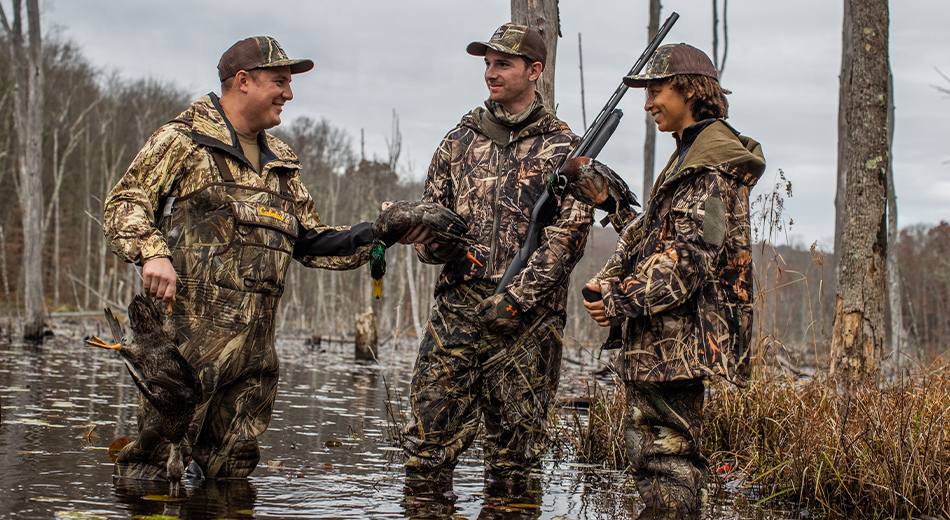
Growth leads to increases in Duck Production, Habitat Conservation, Research, and HunteR3 programs
BISMARCK, NORTH DAKOTA — Thanks to the best fundraising year in Delta Waterfowl’s 115-year history, the organization will deliver more impact for ducks and duck hunters throughout North America.
Delta just wrapped up a record-breaking 2025-26 fiscal year on June 30, with total revenues topping $50 million. Impressive growth across major gifts fundraising and the chapter events system led to increases in support for Delta’s mission to conserve prairie wetlands, produce ducks and ensure the future of waterfowl hunting.
“We’re incredibly grateful to our Board, supporters, volunteers, partners, and staff for helping us amplify our work for ducks and duck hunters,” said Eric Lindstrom, Delta’s chief development officer. “Our supporters and volunteers truly are the backbone of Delta Waterfowl. They drive the mission forward, allowing us to produce more ducks, conserve more habitat, and improve duck hunting both now and for the future.”
During the 2026 duck nesting season, Delta operated 51 Predator Management sites and 16,525 Hen Houses, adding 170,000 ducks to this year’s fall flight. For 2027, Delta plans to expand Predator Management to 58 sites and add 3,025 Hen Houses, increasing duck production to a projected 200,000 ducks.
Last fall, Delta launched Restoring Our Refuges, advocating for funding to revitalize waterfowl habitat on federal waterfowl refuges and state wildlife management areas. Delta continues to work with the Natural Resources Conservation Service in the United States and provincial officials in Canada to conserve small wetlands that are so critical for breeding ducks.
Delta continues to lead in research, currently undertaking 43 important waterfowl research projects. The slate includes innovative work tracking canvasback and mallard movements, evaluating duck-nest predation, modeling survival rates, and assessing duck production.
The University Hunting Program, which introduces college students studying wildlife management to hunting, continues to grow exponentially. Delta delivered UHP to 876 students at 146 universities last season. In addition, Delta’s First Hunt program eclipsed 100,000 participants since 2003.
During the past year, Delta chapters hosted a record 365 fundraising and secondary events. The organization also welcomed 50 new chapters, bringing its network to 393 chapters supported by more than 6,300 Volunteers across North America. Delta now has more than 70,000 members.
“Thanks to our supporters, Delta has gained amazing momentum over many years,” Lindstrom said. “Our future is bright. We’re building something special, but there’s still a lot more work to do. We need to carry this momentum forward to address the challenges ducks and duck hunters are facing.”
Delta Waterfowl is The Duck Hunters Organization, a leading conservation group founded in 1911 that uses science-based solutions to produce ducks, conserve prairie wetlands, and ensure the future of waterfowl hunting in North America.
For more information, contact Eric Lindstrom.